
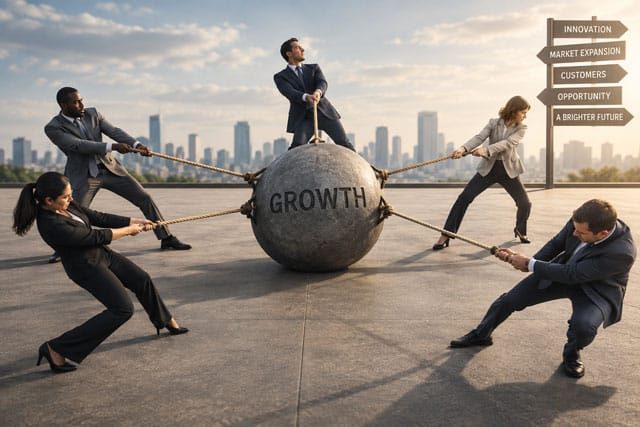
Growth is usually something to celebrate. But as your organization adds customers, employees, locations, or complexity, the people side of business growth doesn’t always keep pace. The leadership structure that worked when you were smaller may begin to strain without anyone recognizing what’s happening.
The warning signs often don’t arrive with flashing lights. They show up as an owner who can’t get out of the weeds, managers who aren’t quite leading, employees who aren’t sure who’s responsible for what, or a team that’s working hard but not necessarily together.
Is the People Side of Your Growth Keeping Up?
When your organization changes, roles and relationships change with it. Someone who was perfect for a job two years ago may now be sitting in a very different job. A dependable employee may have become a manager without ever learning how to lead. And decisions that once naturally belonged to the owner may still be landing on your desk long after they should have moved elsewhere.
Watch for these five signs:
- Too much still depends on you. Your organization has grown, but decisions, problems, and approvals continue to flow back to you. That may be a sign that your leadership capacity hasn’t grown along with the business.
- Your managers are managing work, but not necessarily leading people. Technical competence doesn’t automatically translate into leadership. As your organization grows, managers need the confidence, skills, and authority to lead without constantly looking upward.
- Roles and accountability have gotten fuzzy. Who owns the decision? Who follows through? When several people think someone else is responsible—or everyone comes to you for the answer—growth may have outpaced your organizational structure.
- Good people may be in the wrong roles. Growth changes what jobs require. The question isn’t simply whether you have good employees; it’s whether their strengths and responsibilities still match what the organization needs now.
- People are busy, but they’re not pulling in the same direction. This may be the clearest sign of an organizational alignment problem. Employees can be hardworking and committed yet have different understandings of priorities, direction, and what success looks like.
Growth doesn’t necessarily mean you need more employees—or another full-time executive. Sometimes you need to strengthen leadership capacity and organizational alignment so the people you already have can work more effectively together.
Take a look around your organization. Has your leadership structure kept pace with your growth? Do your people understand where you’re going and their role in getting there? And how much still lands on your desk simply because no one else has clearly taken ownership?
Sometimes an experienced outside perspective can help you see where the gaps are—and help you address them from inside the team. You haven’t peaked ye