

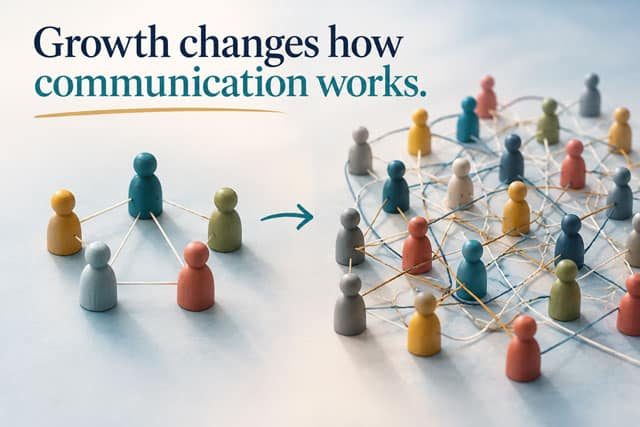
Growth is usually something to celebrate. More customers, more employees, more opportunities. But growth also changes how information moves through your organization. The informal communication that worked when everyone knew what everyone else was doing begins to break down.
Communication problems during business growth rarely happen because people suddenly stop communicating. They happen because the organization has outgrown the way it used to communicate. More people, more layers, and more moving parts create more places for information to get lost, delayed, or distorted.
When Communication Doesn’t Keep Up With Growth
You may notice the effects before you recognize the cause. Watch for these four costly changes:
- People hear different versions of the same message. A decision is made at the leadership level, but by the time it reaches different teams, the message has changed. People act on different assumptions—and everyone believes they understood correctly.
- Important information stays in silos. What one department knows doesn’t necessarily reach another. People make decisions without information that exists elsewhere in the organization, creating rework, frustration, and sometimes expensive mistakes.
- Leaders become communication bottlenecks. Employees learn that the safest way to get an answer is to go directly to you or another senior leader. Before long, you’re spending your day clarifying decisions, connecting people, and answering questions that shouldn’t require you.
- Employees fill in the blanks themselves. When people don’t know what’s happening—or why—silence doesn’t remain empty for long. Assumptions and speculation take its place. During periods of change, that can quickly affect trust and engagement.
The solution isn’t necessarily more communication. More meetings, emails, and announcements can simply create more noise. The real question is whether you have the right communication structure for the organization you’ve become.
Ask yourself: Does important information reliably reach the people who need it? And how much of your organization’s communication still depends on you personally?
As your organization grows, your leadership practices have to grow with it. Sometimes an experienced leader working inside the organization can help identify where communication is breaking down, clarify responsibilities, and build better connections between people and priorities.
Growth changes the air you’re flying in. Make sure your communication systems are ready for it. You haven’t peaked yet!